Ahmed’s execution aboard Flight 127
All the Old KnivesAhmed’s execution aboard Flight 127 becomes visible to Celia Favreau through a newly discovered recording rather than a direct account of the killing. The footage shows an older man falling from the plane’s open doorway and a younger armed man closing it after declaring, “Take away your spy!” The scene makes the death tangible while leaving the larger questions of betrayal and identification unresolved.
The recording and the killing
Celia is at home, cleaning up after dinner, when the memory of her last night with Henry Pelham returns. She recalls calling a number in Amman from a pay phone and recognizing the Russian-speaking voice as Ilyas Shishani. Back at the embassy, she had considered why Bill Compton might contact a radical Islamist or give up the team’s asset on the plane. The possibilities she weighed—money, a threat, or blackmail—did not make the act intelligible to her.
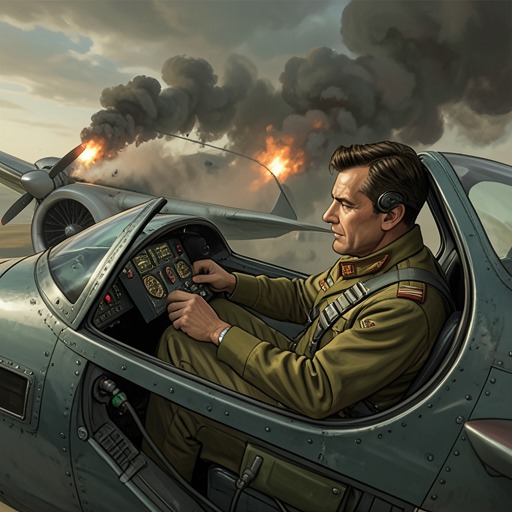
Her recollection is interrupted by Gene Wilcox, who brings her a recording that is only two minutes old. It shows Flight 127 parked on an empty, closed-down airport tarmac at night. The camera remains steady until the aircraft’s forward entry door opens. A man appears in the doorway: elderly, gray-haired, dark-skinned, wearing a white shirt with rolled-up sleeves and beige slacks. His head suddenly blurs as if struck from behind; after a distant thump, he tumbles out of the plane and disappears from view.
The camera dips to the body crumpled on the tarmac, then returns to the doorway. A younger dark-skinned man stands there with a pistol. He is later identified as Ibrahim Zahir. Wearing a white shirt with rolled-up sleeves like the dead man, he shouts in English, “Take away your spy!” and pulls the aircraft door shut. The recording does not name the older man, but the subsequent discussion identifies Ahmed as having been killed and connects his death to a final message.
Betrayal and uncertainty
The footage gives concrete form to the question that had troubled Celia in Bill’s office: how an enemy could have obtained the team’s asset aboard the plane. The dead man’s fall, the armed figure at the doorway, and the accusation of a spy make the loss look like a deliberate act, but the recording alone does not establish who disclosed the asset’s identity or how the attackers found him. Celia’s remembered call to Ilyas and her suspicion about Bill remain questions, not proof of a chain of responsibility.
The killing also complicates the meaning of Ahmed’s final message. Later, Owen Lassiter says the planned attack is off because the Austrians fear Ahmed’s last message, sent before he was killed. Asked whether they believe it was Ahmed, Owen says he does not, and notes that the Austrians do not accept his word as decisive. The message therefore has operational consequences even as its authenticity remains unsettled.
Consequences and narrative role
The execution’s revelation links a private act of recollection to an image recorded at the airport: Celia’s questions about the compromised asset are followed by footage of a body falling from the aircraft. The camera’s brief movement down to the body and back to the doorway turns an indistinct report of loss into a witnessed sequence, but it does not resolve the larger investigation. The shouted command frames the dead man as a spy, while the later dispute over Ahmed’s message leaves open what he communicated and whether the message was genuinely his.
Ahmed’s death also alters the stakes of the planned attack. The Austrians’ fear of his final message is enough to halt the operation, while Owen’s skepticism keeps the warning from becoming a settled explanation. The execution is thus both a killing and a point of uncertainty: it confirms that Ahmed is dead, but leaves the betrayal that placed him on the plane, and the message associated with his last moments, contested.